Fundamentals of Musical Scale Construction
Understanding scale construction begins with the basic step pattern. A major scale follows W-W-H-W-W-W-H, while natural minor uses W-H-W-W-H-W-W. By mapping these intervals onto the chromatic series, musicians can derive modes, key signatures, and transposition techniques essential for analysis.
Understanding Whole and Half Steps in Major and Minor Scales
Whole steps (W) span two semitones, half steps (H) span one. The major scale follows W‑W‑H‑W‑W‑W‑H, while the natural minor follows W‑H‑W‑W‑H‑W‑W. Mapping these intervals onto the chromatic circle shows the relative positions of scale degrees, key signatures, and harmonic relationships. For example, C major (C‑D‑E‑F‑G‑A‑B‑C) has no accidentals, whereas A natural minor (A‑B‑C‑D‑E‑F‑G‑A) shares the same key signature but differs in step pattern. Mastering the W/H framework equips musicians to transpose, modulate, and improvise confidently.
- Major: W‑W‑H‑W‑W‑W‑H
- Natural Minor: W‑H‑W‑W‑H‑W‑W
Transposing a piece shifts every note by a fixed interval; moving C major up a whole step yields D major, preserving the interval sequence. Relative minor keys share the same key signature as their major counterpart, located a minor third below the tonic, aiding modulation. Key signatures arise from counting sharps or flats needed to avoid accidentals, directly linked to the scale’s interval structure.
Whole‑tone scales, composed exclusively of whole steps, produce a symmetrical, ambiguous sound that has been exploited in impressionistic orchestration and modern jazz. Because each pitch is equidistant from its neighbors, traditional tonal functions dissolve, allowing composers to craft ethereal, floating harmonies that defy conventional resolution.
These concepts provide the basis for more exploration
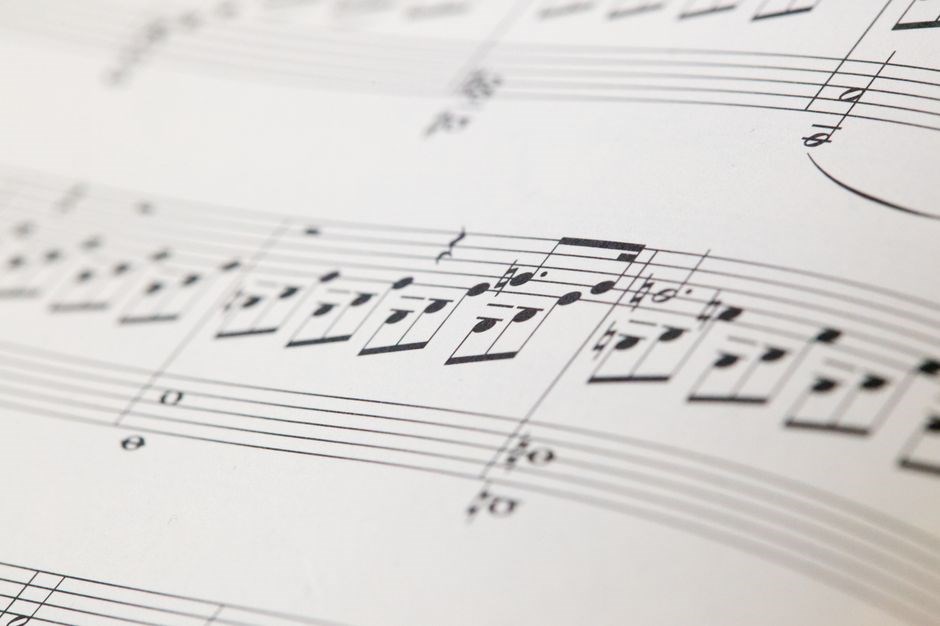
Chord Formations and Progressions
Triads, seventh chords, and voice leading shape harmonic motion. I‑IV‑V‑I progressions anchor tonality; secondary dominants and modal interchange add color. Jazz expands with extended chords, altered tones, and substitutions for richer voice leading!!!
Triads, Seventh Chords, and Voice Leading Techniques
Triads form the backbone of tonal harmony, built from stacked thirds: root, third, fifth. In major keys, the I, IV, and V triads are naturally consonant, while the ii, iii, vi, and vii° provide functional tension. Seventh chords extend this framework by adding a seventh interval, creating dominant (V7), major (Imaj7), minor (ii7), and half‑dim (viiø7) colors. Voice leading focuses on smooth motion of individual voices: the third of a V7 resolves up a half step to the tonic, the fifth resolves down a step, and the seventh resolves down to the third of the tonic triad. Common practices include the use of stepwise motion, avoiding parallel fifths and octaves, and employing suspensions or passing tones to create rhythmic interest. In jazz, voice leading often incorporates chromatic approach tones and altered extensions (♭9, #9, ♭5, #5) to enrich harmonic texture while maintaining functional resolution. Understanding these principles allows composers and performers to craft coherent progressions that balance stability and surprise. Pedal points can sustain a bass note while upper voices move, creating tension that resolves when the pedal shifts. Modal interchange introduces chords borrowed from parallel modes, such as using a IV♭ or vi♭ in a major context. Quartal chords texture

Modal Theory and Its Practical Applications
Modes reorder scale degrees, creating colors. The Ionian, Dorian, Phrygian, Lydian, Mixolydian, Aeolian, and Locrian each supply intervals. Musicians use modes to improvise, craft melodies, and color chord progressions for expressive nuance deep.

Using Modes for Improvisation and Composition
When a soloist or composer selects a mode, they are choosing a specific set of intervallic relationships that shape melodic contour and harmonic context. The Dorian mode, for instance, offers a minor feel with a raised sixth, giving a bright, jazzy flavor that works well over minor‑major ii–V–I progressions. A Lydian scale, with its augmented fourth, can inject a dreamy, ethereal quality into a major‑tonic progression, especially when paired with suspended or altered dominant chords. In practice, a guitarist might outline a Lydian sound by emphasizing the raised fourth on the dominant seventh chord, while a pianist could use the same interval to create tension before resolving to the tonic. For improvisers, modes provide a framework for melodic substitution; a Dorian line over a minor ii–V–I can be replaced with a Phrygian line to introduce a darker, Spanish‑influenced mood. Composers can also exploit modal interchange by borrowing chords from parallel modes—such as using a bVII from Mixolydian in a major key—to add color without altering the tonal center. In electronic music, producers often layer modal synth pads with rhythmic patterns that highlight the mode’s characteristic intervals, creating immersive soundscapes. Ultimately, mastering modes expands a musician’s palette, allowing for nuanced expression across genres from folk to fusion, and encourages experimentation with melodic and harmonic possibilities that transcend conventional key signatures. Modal tools empower art and play!

Rhythmic Structures and Meter Analysis
Rhythm shapes form; meter defines pulse. Common time (4/4) offers steady beats, while 3/4 gives a waltz feel. Polyrhythms layer contrasting subdivisions, creating tension. Tuplets subdivide beats into uneven groups, expanding rhythmic language. Meter shifts guide musical narrative. Sync beat.
Polyrhythms, Tuplets, and Metric Modulations
Polyrhythms arise when two or more rhythmic patterns with different beat subdivisions coexist. A classic example is the 3:2 ratio, where three evenly spaced notes align with two notes over the same span, producing a cross‑division feel. Musicians often notate these using tuplets, which explicitly state how many notes occupy the space of a different number of standard beats. For instance, a triplet of sixteenth notes inside a quarter‑note beat indicates three notes in the time of two. Tuplets can be simple (2:3, 3:4) or complex (5:8, 7:9), and they allow composers to embed syncopated or dotted patterns within a steady meter. Metric modulation, on the other hand, shifts the perceived pulse by redefining the value of a beat. By treating a note value that was previously a subdivision as the new beat, the music can glide from one tempo feel to another without changing the actual tempo. This technique is frequently employed in jazz and contemporary classical works to create subtle or dramatic tempo changes. Together, polyrhythms, tuplets, and metric modulations expand rhythmic vocabulary, enabling nuanced phrasing and expressive timing that challenge performers and enrich listeners’ experience. In practice, performers must internalize these shifts through metronome work, counting exercises, and rhythmic dictation. Composers often annotate tempo markings with Italian terms like “rit.” or “accelerando” to signal metric changes, while percussionists use visual cues on the staff to maintain alignment. The interplay of polyrhythms, tuplets, and metric modulations creates a dynamic tapestry that invites active listening and precise execution, making rhythm a central pillar of musical expression. This rhythmic framework demands listening.
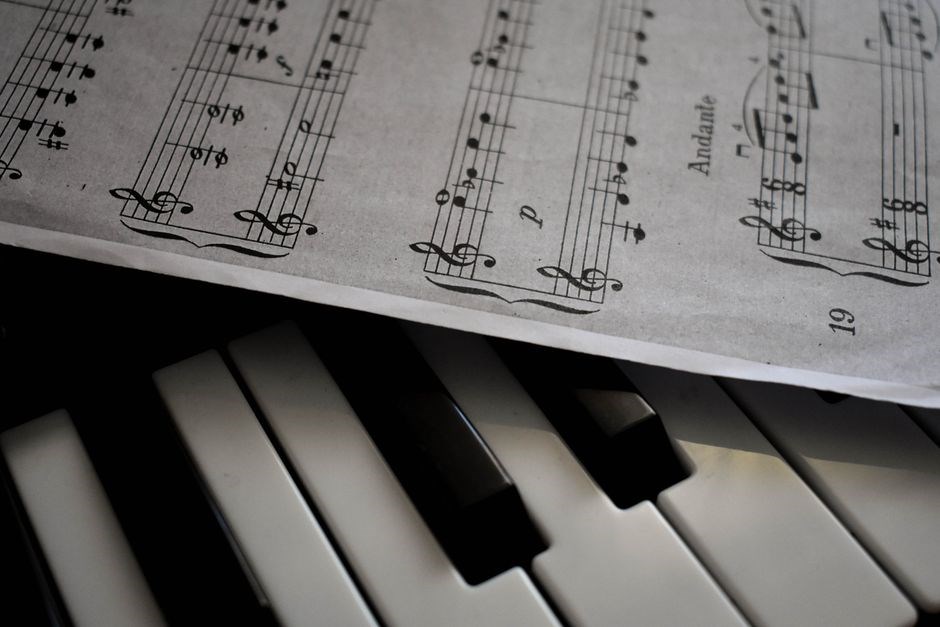
Form and Structure in Musical Works
Musical form defines how sections repeat, contrast, and develop. Common models include binary, ternary, and sonata‑form, each with distinct thematic and harmonic roles. Understanding these structures guides analysis, composition, and performancedecisions
Binary, Ternary, and Sonata‑Form Analysis
Binary form (AB) presents two contrasting sections, often with the first repeated (A|A) or varied (A|A′). The second section introduces new material or a key shift, creating a clear forward motion. Ternary form (ABA) expands on this by inserting a contrasting middle section (B) between two similar outer sections (A). The return of A reinforces thematic unity and offers resolution. Sonata‑form, the backbone of Classical era movements, consists of exposition, development, and recapitulation. The exposition presents two key areas, usually tonic and dominant, separated by a transition. The development manipulates thematic fragments, modulates, and creates tension. Finally, the recapitulation restates the original themes in the tonic key, resolving harmonic conflict and providing closure. These structural models guide composers in shaping narrative flow and help analysts identify form through thematic and harmonic cues. In practice, analysts examine key signatures, phrase lengths, and motivic transformations to map the architecture. The exposition often ends with a cadence that signals the key change, while the development may employ fragmentation, inversion, or augmentation. The recapitulation restores the initial material, often with subtle reharmonization, to bring the movement to a satisfying conclusion. Understanding these forms equips performers to anticipate transitions, maintain coherence, and convey the intended emotional arc. Moreover, composers sometimes blend forms, creating hybrid structures like sonata‑binary or ternary‑binary hybrids, allowing flexibility while preserving recognizable patterns. By mastering these f

Harmony in Contemporary and Jazz Contexts
Modern jazz contemporary music use extended chords—9ths, 11ths, 13ths, altered dominants—and modal interchange.Voice leading favors smooth chromatic motion, while reharmonization offers fresh progressions that challenge traditional harmonic roles.
Extended Harmonies, Modal Interchange, and Voice Leading

In contemporary jazz and modern pop, the use of extended harmonies—9ths, 11ths, 13ths, and altered tones—expands the tonal palette beyond triads. Musicians often employ the tritone substitution, where a dominant chord is replaced by a chord a half‑step away, creating smooth voice leading while preserving the target resolution. Modal interchange draws chords from parallel modes or keys, such as borrowing a ♭III or ♭VI from the minor mode to color a major progression. This technique adds emotional depth and unexpected color. Voice leading focuses on moving individual voices by step or small intervals, avoiding large leaps that break the line. By keeping inner voices close, the harmony retains coherence even when chromaticism is present. In practice, a ii–V–I progression might become ii–♭III–♭VI–V7–I, with each chord’s upper voice moving by step. Extended chords are voiced to emphasize the 9th or 13th, often leaving the 7th and 5th implied. The result is a fluid, richly textured harmonic landscape that supports melodic improvisation and contemporary songwriting.
When applying these concepts, consider voice leading as a narrative thread: the bass line often anchors the harmonic motion, while the upper voices weave melodic motifs that anticipate the next chord. In jazz trio settings, the pianist might outline a 13th chord on the left hand, leaving the right hand to play a melodic line that resolves to the dominant. In pop ballads, a borrowed ♭VI can soften a bridge, creating a wistful atmosphere before returning to the tonic. The key is to balance tension and release, ensuring that each harmonic shift feels purposeful yet surprising.
Musicians record a chord chart with Roman numerals, then test voice leading by playing each chord in multiple inversions. This reveals tensions and guides improvisers toward expressive solos today!
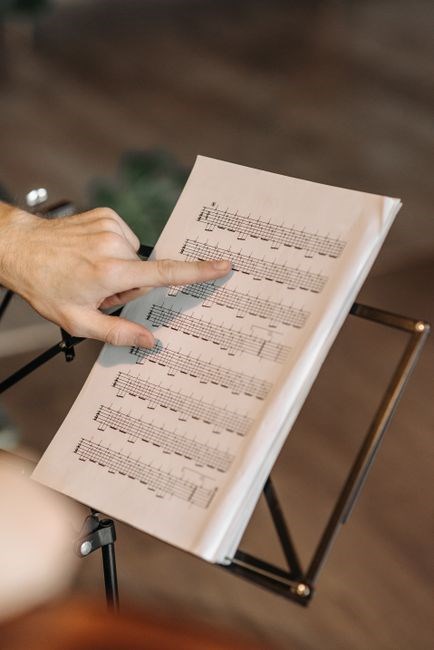
Transcription and Analytical Methodologies
Transcribing involves listening, transcribing notation, and verifying rhythmic accuracy. Analysts use Schenkerian trees, phrase structure, and digital tools like Sibelius or MuseScore to uncover underlying voice leading and harmonic functions.!!!
Score Reading, Schenkerian Analysis, and Digital Tools
Score reading is the foundational skill that allows musicians to decode written music accurately. It requires familiarity with staff notation, clefs, key signatures, time signatures, dynamics, articulations, and expressive markings. By developing quick visual recognition of note values, accidentals, and rhythmic groupings, performers can translate the score into performance with minimal hesitation. Schenkerian analysis, pioneered by Heinrich Schenker, offers a hierarchical view of tonal music. It reduces a composition to its fundamental structure, revealing underlying voice leading and harmonic progressions. Analysts trace the linear progression from the fundamental bass line (Urlinie) through the descending line (Abstiegslinie) to the final harmonic resolution. This method exposes long‑range relationships that are often invisible in surface‑level analysis. Digital tools have revolutionized both score reading and Schenkerian study. Modern notation software such as Sibelius, Finale, and Dorico allows composers to create, edit, and playback scores with high fidelity. MusicXML export/import facilitates collaboration across platforms. For Schenkerian analysis, specialized programs like Schenkerian Analysis Tool (SAT) or the open‑source Schenkerian Analysis Plugin for MuseScore provide visual representations of the fundamental structure. Additionally, audio‑to‑MIDI converters and spectral analysis software help transcribers verify pitch content and rhythmic accuracy. Integrating these tools into a workflow streamlines process from initial transcription to analytical insight enabling musicians to deepen their theoretical understanding while maintaining practical performance skills.